

Asbestos lagging in pipes: the hidden hazard in older homes
When we think about asbestos in the home, garage roofs, ceiling coatings, or old floor tiles are usually the first things that come to mind. But in fact, one of the most hazardous forms of asbestos is often hidden away where most of us rarely look. And that’s wrapped around old pipework.
Asbestos pipe lagging was widely used throughout the UK for much of the 20th century. It helped to insulate heating systems and improve fire resistance in homes and commercial buildings alike. Although its use was banned decades ago, it can still be found in a lot of properties that were built or refurbished before the new millennium.
Unlike some other asbestos-containing materials (ACMs), pipe lagging is thought of as a higher-risk product because of the way it was manufactured and just how easily it can release harmful fibres if it’s disturbed.
So, whether you’re renovating an older house, replacing your heating system, or just curious about what might be hiding underneath your floorboards or behind your walls, understanding asbestos lagging can help you make much safer decisions.
What is asbestos lagging?
Pipe lagging is an insulating material that’s applied around pipes, boilers, valves, joints, and heating systems. This is done to reduce heat loss and provide fire protection. Before asbestos was banned, manufacturers commonly mixed asbestos fibres into these products because they were heat resistant and, more importantly, relatively cheap.
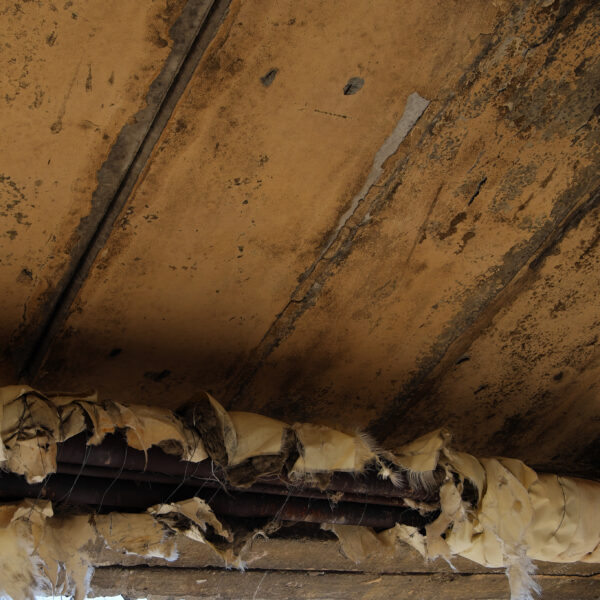
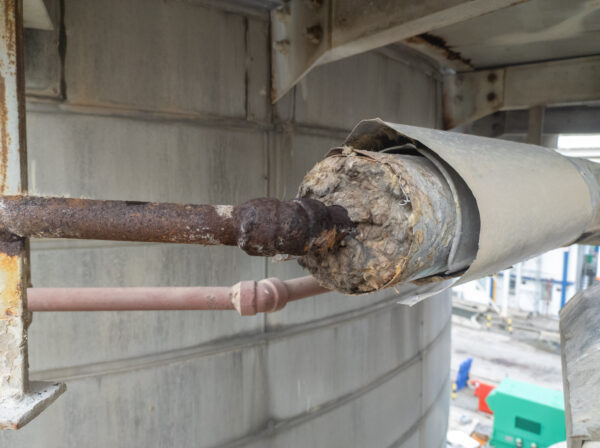
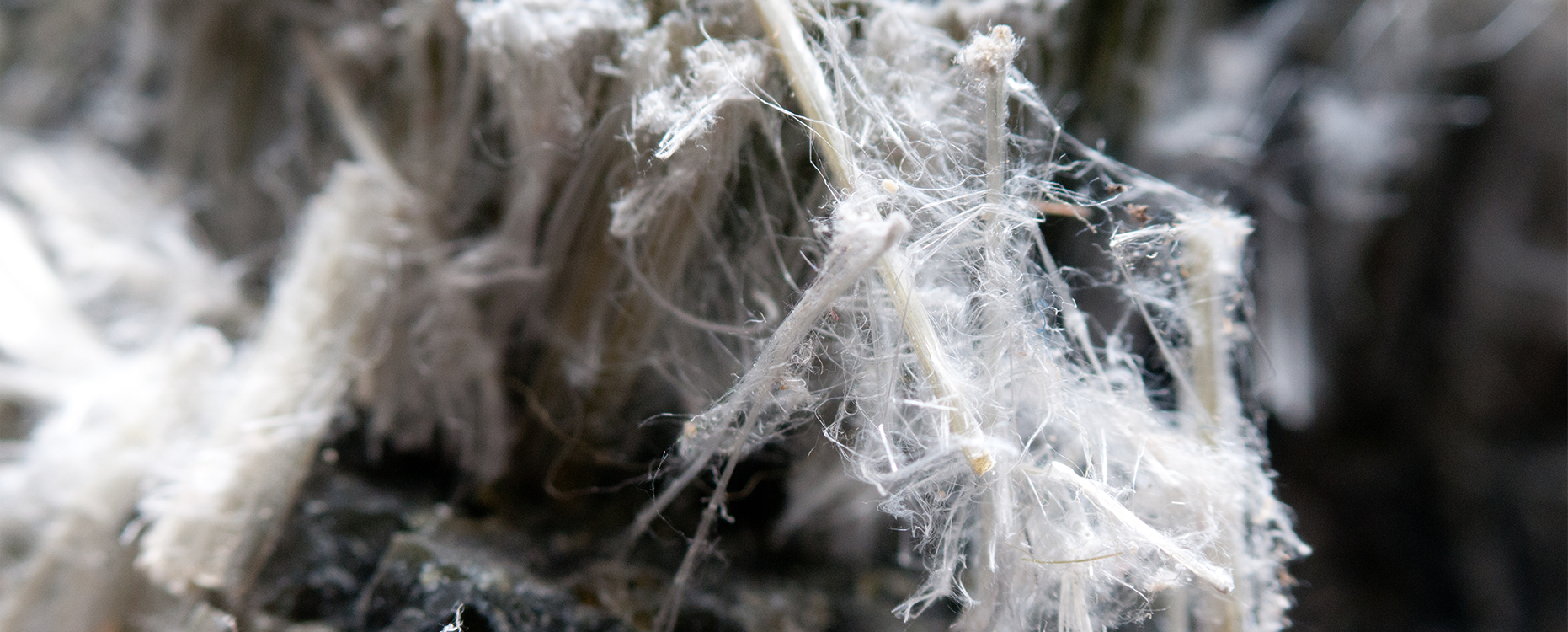
Depending on when it was installed, asbestos lagging can look very different from one property to another. In some cases, it looks like a thick, plaster-like coating wrapped directly around pipework. Elsewhere, it might be covered by painted canvas or a protective outer layer, making it difficult to identify without disturbing it.
This is one of the reasons asbestos lagging often goes unnoticed. It might be concealed behind boxing, suspended ceilings, service ducts, or within the floor void where it remains untouched for many years.
How is pipe lagging different from other asbestos materials?
Not all asbestos-containing materials carry the same level of risk. Products like asbestos cement, for example, are relatively solid. Their fibres are tightly bound into the material. So, as long as they remain in good condition, the risk of fibre release is much lower.
But pipe lagging is different. The insulation is softer and much more friable, meaning it can crumble or break apart more easily. Even small amounts of damage can release asbestos fibres into the air, which carry all kinds of health risks.
Age can also play a part. Decades of moisture, temperature changes, vibration, or previous repair work can leave the lagging cracked or deteriorated. This, in turn, increases the chance of fibres becoming airborne. And that’s why asbestos lagging always calls for a more carefully controlled approach than many lower-risk ACMs.
Where is asbestos lagging commonly found?
Although modern heating systems don’t asbestos insulation anymore, a lot of older properties still contain original pipework hidden throughout the building.
Some of the most common locations include:
- Boiler rooms and plant rooms
- Floor voids containing central heating pipework
- Underfloor service ducts
- Basements and cellars
- Airing cupboards with older heating systems
- Around hot water cylinders
- Behind boxing that conceals pipework
It’s also commonly found in schools, hospitals, warehouses, offices, public buildings, and other properties built during the period when asbestos was widely used. We’ve heard from plenty of homeowners who never realised it was there because it sat behind walls or beneath floors, only to become visible when renovation or maintenance began.
Why was asbestos used on pipes?
Looking back with what we know today, it’s hard to understand why asbestos was such a ubiquitous building material. But, at the time, it was viewed as a natural wonder. When used for pipe lagging, it helped retain heat within systems, protected surrounding materials from high temperatures, and offered a remarkable level of fire resistance.
On top of all of that, it was also relatively inexpensive and easy to apply. Only later did we come to understand the serious health risks associated with asbestos exposure. This led to increasingly strict regulations before it was eventually banned altogether.
When is asbestos pipe lagging most likely to be disturbed?
In many cases, asbestos lagging remains undisturbed for years or even decades. The risk usually comes to the fore when work is carried out nearby. This might include replacing a boiler, upgrading central heating, converting a loft, removing old pipework, or carrying out electrical or plumbing work.
Even something as simple as opening a boxed-in section of pipework can reveal asbestos insulation that nobody knew existed before.
Older commercial buildings face similar risks during refurbishment, maintenance, or alterations, especially where original services remain in place. And that’s why tradespeople working on older buildings should always remain aware of the possibility that asbestos might be present.
Could you identify asbestos lagging by sight?
It’s understandable to hope that there’s an easy visual clue that confirms whether pipe insulation contains asbestos. It would certainly make the process easier and less time-consuming for everyone involved. Unfortunately, it just isn’t that simple.
Some asbestos lagging appears white or grey. Other examples are brown, rough in texture, or wrapped in cloth. Some has been painted over several times, while other installations are completely enclosed behind protective coverings.
Plus, modern insulation products can look remarkably similar. Without appropriate analysis, it’s impossible to confirm whether lagging contains asbestos simply by looking at it. If there’s any uncertainty, the safest approach is to assume it could contain asbestos until proven otherwise.
What should you do if you discover asbestos pipe lagging?
We know that discovering suspicious insulation can be worrying, even more so if you’re halfway through a renovation or DIY project. But the most important thing is to not panic. Follow these steps and you’ll be able to protect yourself and those around you:
1. Leave the material alone
Avoid touching, scraping, cutting, or trying to remove the lagging yourself. Even if it looks like it’s in good condition, unnecessary disturbance can increase the risk of fibre release.
2. Restrict access
If you can, stop other people from entering the area until the situation has been assessed. Keeping the area undisturbed reduces the chance of fibres spreading throughout the property.
3. Speak to asbestos specialists
You should always seek professional advice before any further work takes place. An experienced asbestos contractor can advise on the safest next steps as fully licensed asbestos removal is always required when removing pipe lagging.
What shouldn’t you do?
When homeowners discover suspicious pipe insulation, there are a few common mistakes that can make the situation worse:
- Don’t attempt to remove the material yourself, even if you’re confident it contains asbestos.
- Don’t use domestic vacuum cleaners to clear debris, as they are not designed to capture asbestos fibres.
- Don’t brush, sand, scrape, or break away damaged insulation to see what’s underneath.
- Finally, don’t assume painted or sealed lagging is automatically safe to disturb. Protective coatings might hide asbestos rather than eliminate the risk.
Why licensed asbestos removal is often needed
Unlike some lower-risk asbestos products, pipe lagging falls into the category of licensed asbestos work because of the level of fibre release that can occur during removal.
Licensed asbestos removal involves carefully planned working methods, controlled enclosures where required, specialist equipment, and strict decontamination procedures designed to minimise risk throughout the project.
The resulting asbestos waste must also be transported and disposed of through authorised hazardous waste facilities in line with current legislation. Attempting to remove pipe lagging without the appropriate knowledge or controls can place occupants, contractors, and neighbouring properties at unnecessary risk.
How Henderson Environmental can help
We regularly support homeowners, landlords, commercial clients, schools, and public sector organisations across the North East with the safe management and removal of asbestos. Our experienced team understands the challenges that older buildings can present and takes a practical, measured approach to every project.
Whether asbestos pipe lagging has been uncovered during planned refurbishment or identified as part of ongoing maintenance works, we’ll recommend the safest route forward based on the materials involved and the work required.
So, if your property was built or refurbished before 2000 and you’re planning work involving older heating systems or concealed pipework, it’s worth taking a cautious approach. Knowing what asbestos pipe lagging is and why it should never be disturbed can help protect both your property and the people living or working within it.
If you suspect asbestos lagging has been uncovered, don’t take unnecessary risks. Speak to the team at Henderson Environmental Services for professional advice and safe, compliant asbestos removal. Give us a call on 0191 4885195, send an email to info@hendersonenvironmental.co.uk, or fill in our contact form to get started.

Testimonials