
Asbestos ceilings in old homes: identification and safe removal
If your home was built or renovated before 2000, there’s a strong chance that asbestos was used in your ceilings. Whether in paint, boards, or tiles, what was once regarded as an exceptional construction material, is now recognised as a serious health hazard when its microscopic fibres become airborne and inhaled.
Today, finding suspicious looking areas of an old home can raise immediate safety concerns for homeowners and rightly so, but it doesn’t always mean your health is at an immanent risk.
Understanding the different types of asbestos used, recognising key visual indicators, and knowing when to call out professional support is the way to protect your household and act confidently to a sighting of potential asbestos in your ceiling.
The history of asbestos in old house ceilings
Asbestos was popularised from about 1930 onwards due to the fact that it was a cheap, abundant material with multiple natural properties that made it desirable. Due to its strength and thermal insulation, it was seemingly the perfect material for building houses, not to mention its advanced fire resistance qualities.
Furthermore, asbestos was mixed into ceiling plasters and insulation panels in order to dampen the sound between floors and prevent the loss of heat. All of this made it the standard choice for residentials homes and blocks of flats.
Years later, asbestos made its way into decorative coatings like Artex to save time that was previously being lost to traditional plastering methods. by the 1970s, Artex finishes were a standard interior design trend and could be found in the majority of homes.
As medical research began linking inhaled airborne asbestos fibres to fatal health conditions, regulatory restrictions were put into place.
Different types of asbestos used in old house ceilings
There are three types of asbestos that were used for the construction or decorative finish of ceilings in old UK homes, each possessing distinct physical properties and common applications.
Chrysotile (white asbestos)
White asbestos was the most used type of asbestos in residential properties. It was mixed into textured ceiling coatings like Artex, also ceiling plasters, adhesives, and acoustic ceiling tiles.
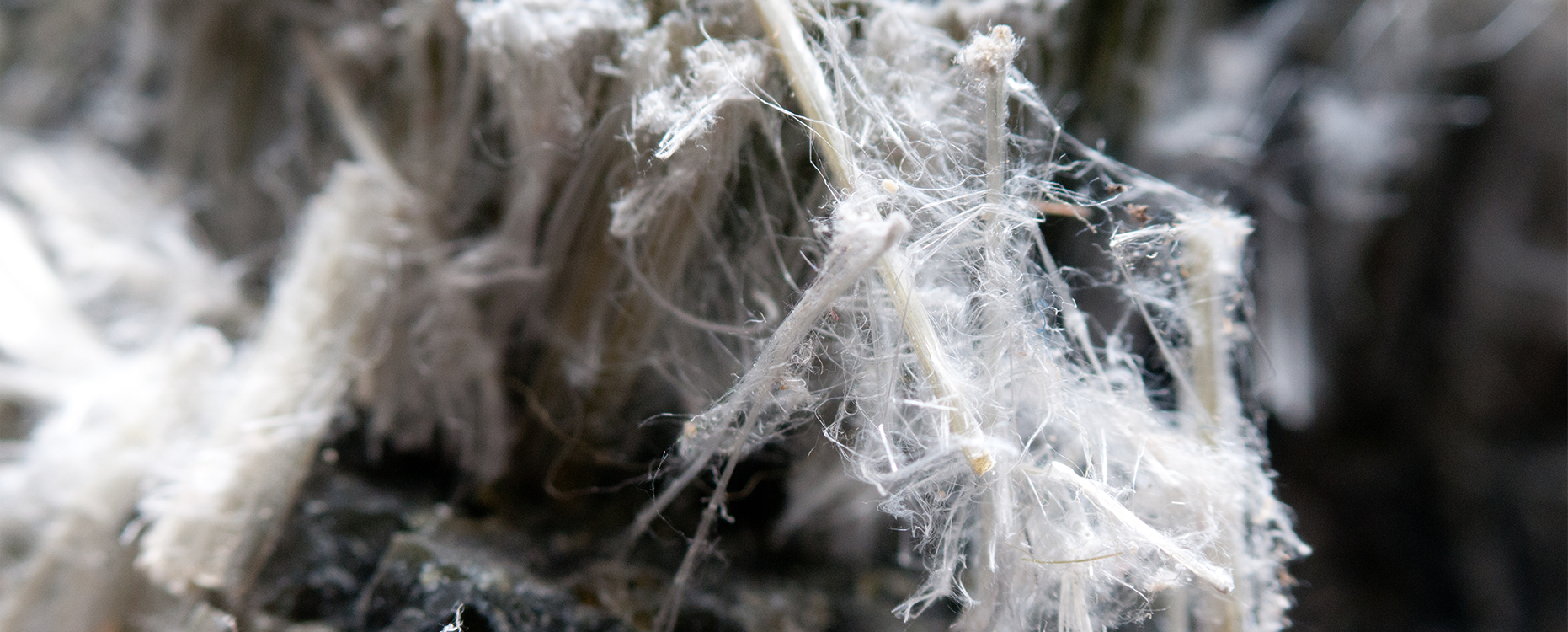
The curly fibres of this material are what made them so desirable for construction as they had great flexibility and strength. Luckily, this type of asbestos was mostly heavily bound in hard materials like plaster. Therefore, chrysotile poses a much lower immediate risk unless scraped or sanded.
Amosite (brown asbestos)
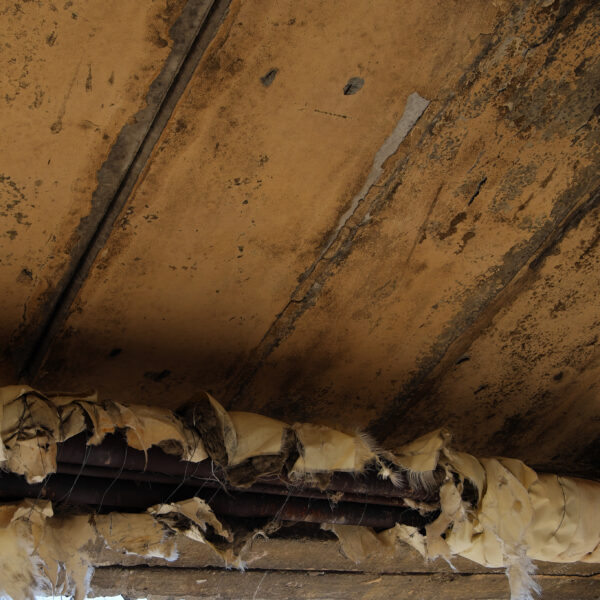
This type of asbestos material is most frequently found in Asbestos Insulating Board (AIB), fire-retardant ceiling tiles, soffits, and garage ceilings.
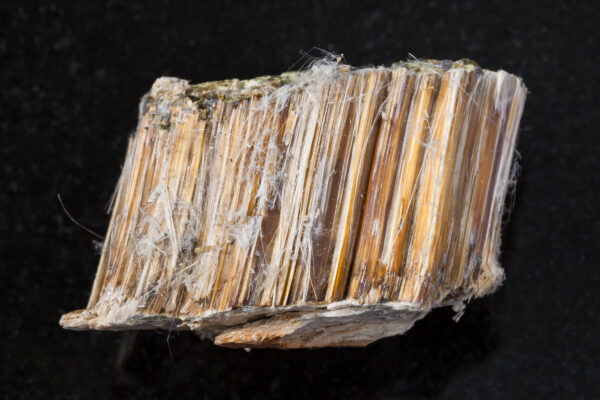
Amosite is made up of straight fibres, similar to a needle. AIB is a lot more friable than the likes of Artex, so disturbance releases hazardous fibres much more easily.
Crocidolite (blue asbestos)
Crocidolite is less common in domestic ceiling than the previous two materials but was historically used in a specialised spray-applied insulation on structural beams and fireproofing panels that can be found in ceilings of old houses or flats.
Blue asbestos is widely considered as the most dangerous form of asbestos by experts due to its extremely thin and sharp fibres. Amosite and crocidolite were strictly banned in 1985, 14 years before their slightly less high-risk counterpart, chrysotile, in 1999.
When to consider looking for asbestos in your old home
Asbestos that remains in UK homes now is almost always completely secure in AIB, plaster, tiles, piping insulation, and even window putty. This means that homeowners don’t need to go searching for asbestos-containing materials in their old house without reason.
However, there are a few instances that should act as a motive for conducting a professional search:
- Renovation plans, whether a DIY or professional project that involves drilling, cutting, sanding, or knocking down ceilings should be prefaced with a proper safety check.
- When moving into a house built before 2000, especially if they were built between the 1960s and 1970s, should be inspected prior to redecoration.
- If you’ve had a recent leak of accidental impact that has broken panels in your ceiling, it would be wise to conduct a search.
Importantly, asbestos cannot be identified by the eye alone. The only definitive way to confirm its presence and assess its risk level is through professional laboratory sampling
How to identify asbestos in your old house’s ceiling
In the instance that you are planning a renovation or moving into an old home, here are a few of the identifying factors of asbestos in ceilings:
Decorative ceiling finishes
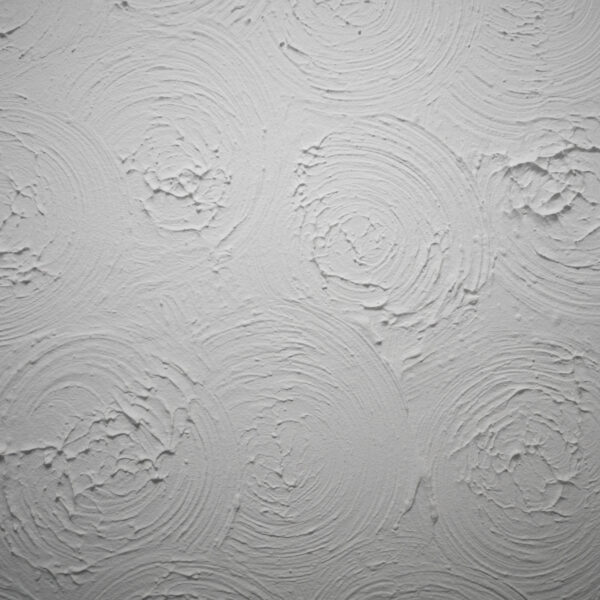
Swirls, fans, and stipple patterns are all typical of Artex ceiling coatings. Artex also presents a much more solid surface as opposed to more modern, softer surface coatings. Ceilings with these patterns are likely to contain Chrysotile if your home was built before 2000.
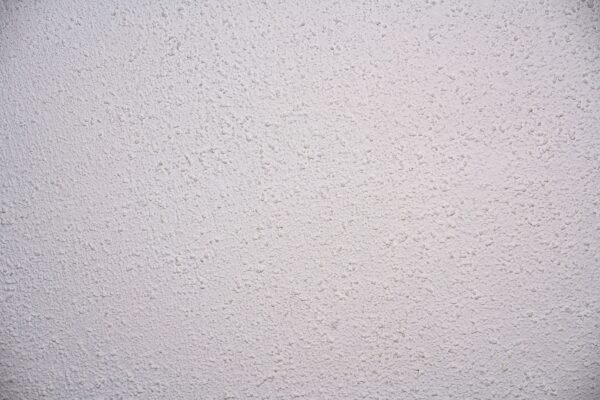
Be aware that these patterns could also be covered up by more recent layers of paint or plaster, but homeowners should not try and verify this themselves.
Specific rooms
AIB linings are extremely common in garages and utility rooms as, years ago, this was the answer to strict fire separation building regulations.
This means there could be dormant Amosite in the ceilings of these rooms. Checking the underside of roof overhangs and the ceilings of airing cupboards for grey/off-white coloured or chalky and soft surfaces can help determine whether you need a professional inspection.
Fixings
Exposed cover strips like flat timber or plastic batten strips fitted over panel joints can be a sign of AIB ceiling panels rather than seamless plasterboard.
Appearance of panels
AIB in your old home’s ceiling will have either a pale grey, off-white, or cream finish and is thinner than modern plasterboard, which is usually 9.5mm – 15mm thick.
Always observe these features visually and from a safe distance. It’s crucial that homeowners do not scrape, poke, press, or sand the suspicious area in any way to avoid the risk of releasing fibres.
How a professional handles asbestos in ceilings of old homes
For homeowners, the most important thing to do is to contact a professional immediately upon suspicion that there is asbestos in your ceiling. When we get a call out, here’s the steps we follow to as efficiently as possible:
- An initial site visit is carried out where the area is inspected and asbestos types are verified.
- A thorough Risk Assessment and Method Statement (RAMS) is put together, detailing safe procedures, strategies to achieve containment, and a realistic timeline is laid out.
- Then, undamaged ceilings are professionally sealed to lock fibres in place safely.
- Following this, our specialist team erect sealed enclosures and carry out wet-removal techniques that suppress airborne fibres and allow for the safe extraction of the asbestos.
- We then transport and professionally dispose of waste to a licensed disposal facility, ensuring complete compliance with environmental and legal requirements.
- We then test the air of the affected home and conduct four stage clearance checks to get a legal Certificate of Reoccupation.
How Henderson Environmental supports homeowners with pre-2000 houses
Asbestos ceilings will continue to exist for years in the UK. Safely dormant and sealed, they pose a very low, immediate risk to inhabitants. It’s instances like renovation or ceiling damage when homeowners should call out a professional service as soon as possible.
With decades of experience, HE’s fully licensed teams execute controlled removals following strict Health and Safety Executive (HSE) protocols, so that you and your co-habitants can get back to life and peace of mind as quickly as possible.
Suspect asbestos in your ceilings? It’s not a DIY job. Get in touch today for more information on how we can support your specific location.
Testimonials