

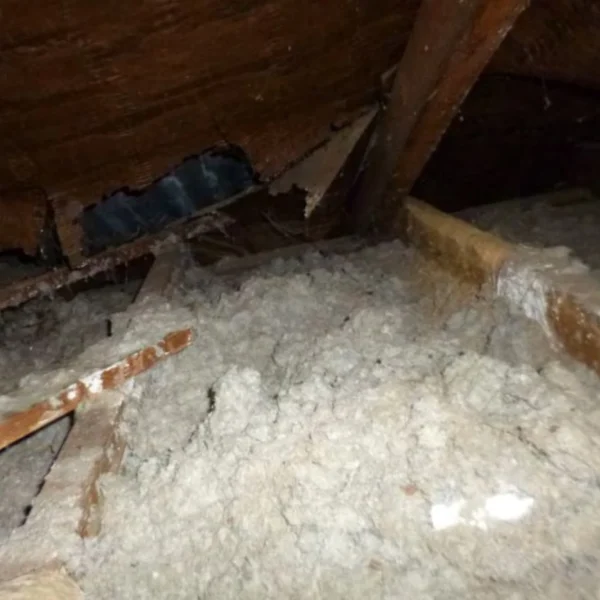
What to do if you find asbestos loft insulation
Discovering unexpected building materials in your house can bring any home improvement project to a sudden stop. Among the various materials hidden away in older properties, asbestos loft insulation is one of the most concerning for homeowners and property managers alike.
If you have recently peered into your loft space and spotted unfamiliar or fibrous insulation, it is completely natural to feel a sudden wave of fear. However, the most important rules to remember are simple: do not panic, and do not touch it.
Understanding what you are dealing with, why it is there, and how to manage it safely is the best way to protect both your health and your property. This complete guide will walk you through everything you need to know about identifying potential risks and the exact steps you should take next.
The history of asbestos loft insulation in UK homes
For much of the 20th century, asbestos was hailed as a wonder material. It was cheap, incredibly durable, and widely available. Because of these properties, it was integrated into thousands of building products across the UK. Lofts and roof spaces were particularly common targets for asbestos installation due to the constant need for effective thermal insulation and fire protection.
While the use of asbestos was completely banned in the UK by late 1999, any property built or renovated before the year 2000 could still contain it. Today, thousands of homes and commercial buildings still have this in their roof voids.
It’s important to remember that the mere presence of asbestos insulation in your loft does not mean you are in immediate danger. Asbestos-containing materials (ACMs) are generally safe as long as they remain intact and undisturbed. The danger arises entirely when the material is damaged or disrupted.
Why was it used for loft insulation?
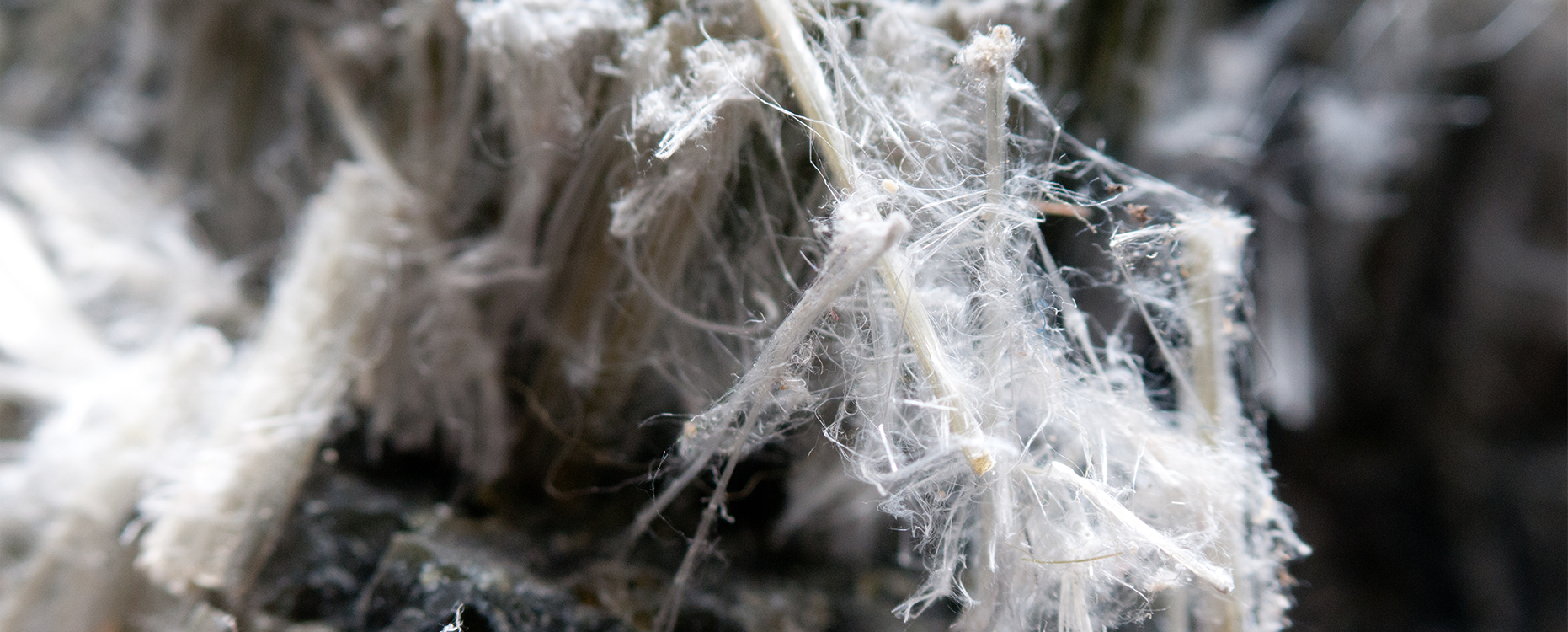
To understand why asbestos was placed so frequently into lofts, it helps to look closely at its unique physical and chemical properties. Asbestos is a naturally occurring silicate mineral made up of millions of microscopic, heat-resistant, and chemically inert fibres. It possesses extraordinary tensile strength, excellent thermal insulation capabilities, and highly effective fireproofing qualities.
In an area of the home that is highly susceptible to extreme temperature fluctuations and severe fire risks, like a timber-framed loft, asbestos seemed like the ultimate, permanent engineering solution for early builders and architects.
Why loft spaces pose unique risks
The severe health hazards associated with inhaling loose asbestos fibres are incredibly well-documented by modern medical science. When asbestos-containing materials are disturbed, millions of microscopic, invisible fibres are instantly released into the surrounding air. Because these fibres are so small and light, they can remain suspended in the air for days.
When breathed in, they bypass the body’s natural filtration systems and become permanently, deeply lodged within the lung tissue and lining. Over a period of decades, this causes severe internal scarring and cell mutation, leading to fatal respiratory diseases, including asbestosis, lung cancer, and mesothelioma.
Loft spaces pose a uniquely high risk for accidental asbestos disturbance due to how these specific environments are typically used by modern occupants:
Renovations and DIY projects
Undertaking home improvements like drilling ceilings, cutting timber, or pulling up floorboards can unknowingly disturb hidden insulation and instantly fill an enclosed loft with a concentrated cloud of toxic dust.
Storage and routine access
Frequently moving heavy storage boxes or stepping between joists creates continuous friction that gradually grinds down fragile insulation materials, releasing harmful fibres into the air every time you enter the space.
Maintenance and utility work
Tradespeople working on pipes or cables can easily disrupt hidden asbestos in confined, dimly lit lofts, accidentally exposing both themselves and the residents living below to hazardous fibres.
Airflow, gaps, and contamination
When the loft hatch is opened, rising thermal drafts can pull loose airborne fibres down into the main house, easily contaminating bedrooms, hallways, and furniture through ceiling gaps and light fixtures.
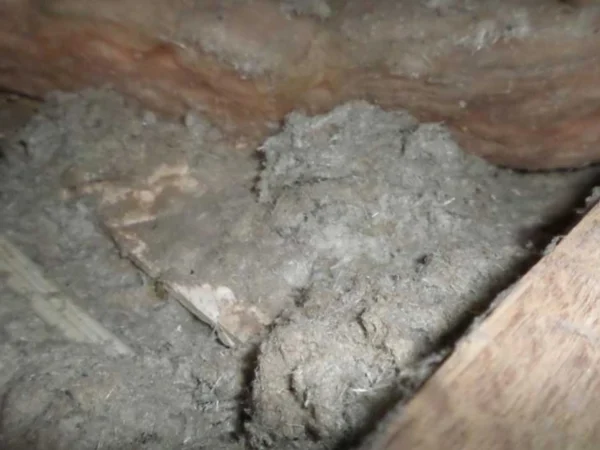
What to do if you suspect asbestos
If you are working in your roof space and suddenly spot a strange material that looks like loose-fill asbestos or suspect vermiculite, you must act quickly and calmly. This is how to make sure everyone in your property remains completely safe from exposure:
1. Stop work immediately
The very moment you suspect a material contains asbestos, stop what you are doing. Do not attempt to finish the specific DIY task you are working on and do not try to clean up the immediate workspace. Drop your tools safely and step completely away from the material.
2. Do not disturb the material
This is the most critical rule of all. Do not try to scoop up the fallen material, attempt to bag it up, or try to move it out of the way. Never, under any circumstances, use a standard household vacuum cleaner or a dustpan and brush to clear up suspected asbestos dust.
A regular vacuum cleaner will entirely fail to trap the microscopic fibres. Instead, it will pull them through the internal filters and spray them directly out of the exhaust, severely contaminating the air across your entire house.
3. Isolate the loft area
Carefully and slowly exit the loft space, making sure you do not violently shake your clothing or hair if you think dust has settled on you. Close the loft hatch firmly. If the hatch has visible gaps or a loose fit, you can temporarily seal the edges with standard duct tape to prevent internal drafts from drawing fibres down into your living space. Make sure that all family members, tenants, contractors, and pets are blocked from entering the upper level.
4. Seek professional advice
Do not attempt to purchase a cheap, DIY asbestos testing kit to sample the insulation yourself. Taking an accurate sample requires scraping or moving the material. This will inevitably release dangerous fibres directly into your breathing zone if you lack specialist equipment and professional training. Instead, contact an accredited environmental specialist to handle the situation safely.
Professional testing and licensed removal: why it matters
Testing
Once you have successfully isolated the area, the next phase involves professional intervention. An experienced, accredited asbestos surveyor will visit your property wearing appropriate Personal Protective Equipment (PPE) and specialist Respiratory Protective Equipment (RPE). They will safely extract a tiny, controlled sample of the insulation and send it to a UKAS-accredited laboratory for sophisticated microscopic analysis.
The laboratory test will determine conclusively whether asbestos is present and identify the exact fibre type involved.
If the test returns positive for asbestos loft insulation, you will need to formulate a professional management or removal plan. Because loose-fill asbestos and contaminated vermiculite are highly friable materials, their safe removal almost always constitutes licensed work under UK health and safety legislation.
Legal removal
The removal cannot be performed by a general builder, a tradesperson, or a standard domestic waste clearance company. It must be legally undertaken by a Health and Safety Executive (HSE) licensed asbestos removal contractor.
These specialists operate under incredibly strict regulatory conditions. The erection of fully sealed plastic enclosures, the use of specialist negative pressure air management units, and the employment of advanced wet-stripping techniques is all planned out to make sure not a single fibre escapes into your home during the intensive extraction process.
Furthermore, safe disposal is a strict legal requirement. Asbestos cannot simply be thrown into a standard commercial skip or taken to a local domestic recycling centre. It must be double bagged in specific UN-approved hazardous waste bags and transported in secure vehicles to a designated hazardous waste landfill site, accompanied by a formal waste consignment note for absolute legal traceability.
Protecting your home is protecting your health
Discovering potential asbestos loft insulation can certainly disrupt your home renovation plans and cause temporary stress. Handling it with the right, educated approach will minimise both health risks and future structural liabilities. Managing asbestos safely is entirely about patience, caution, and relying on professional expertise rather than taking dangerous and potentially illegal shortcuts.
If you suspect your loft space contains hazardous insulation materials, do not leave the safety of your household to chance. Contact our expert team today. Our fully qualified, licensed professionals can provide safe testing services and expert management guidance to ensure your property remains legally compliant and completely secure for the future.
Testimonials