


Why is professional asbestos disposal so important?
The dangers of asbestos have been well documented, and we have delved into this regularly within our blog, detailing the identification and removal of this carcinogenic substance. However, the story doesn’t end when the final sheet of asbestos-containing material (ACM) is removed from a property.
In fact, the moment asbestos becomes waste, the final critical step in asbestos management is its safe disposal.
Improper disposal can result in environmental contamination, ongoing health risks, and severe legal repercussions. In this blog post, we will explore the importance of correct and compliant asbestos disposal, including the legal framework and environmental stakes.
Why safe asbestos disposal is as vital as removal
While asbestos removal deals with the immediate on-site hazard, disposal addresses the long-term threat. Once removed, ACMs are still highly hazardous. They contain the same microscopic fibres capable of causing fatal respiratory diseases such as mesothelioma and lung cancer.
The primary reason professional asbestos disposal is critical is to eliminate the risk of secondary fibre release. Every step of the disposal chain, from the packaging of waste at the removal site to its final burial, is governed by strict protocols designed to prevent the material from breaking down, becoming airborne, or contaminating land or water sources.
- Asbestos waste must be double-bagged or securely wrapped in heavy-duty plastic sheeting, clearly labelled with the international asbestos warning sign. This is a legal requirement under the Carriage of Dangerous Goods and Use of Transportable Pressure Equipment Regulations.
- Any material that has been in contact with asbestos, including contaminated building debris, tools, cleaning cloths, and the disposable PPE worn by operatives, is legally classified as hazardous waste. These items must be collected, contained, and disposed of under the same controls as the bulk ACMs themselves.
The entire process is designed to ensure that the hazard, once contained, remains contained forever. Any breach of this integrity, whether by a ripped waste bag, an unlicensed skip or illegal dumping, allows the asbestos fibres to re-enter the environment and become a danger to the wider public.
Asbestos disposal legislation
The disposal of asbestos is a heavily regulated process. Any person or organisation producing asbestos waste must comply with these laws or face prohibitive fines and potential imprisonment.
The Hazardous Waste (England and Wales Regulations 2005) classifies asbestos waste as ‘Hazardous Waste’. This classification triggers a strict chain of legal obligations that govern how the material is handled:
A hazardous waste consignment note is a crucial paper trail required for every load of asbestos waste transferred from the site. This note must accompany the waste from the removal site to the licensed landfill. The consignment note details:
- The waste type and quantity (using specific European Waste Catalogue (EWC) codes)
- The location where the waste was produced
- The carrier responsible for transport
The licensed disposal site and the site owner or contractor must retain copies of all consignment notes for a minimum of three years. This documentation is the absolute proof of compliance, should enforcement authorities ever require it.
Any company transporting asbestos waste must be registered as a Hazardous Waste Carrier with the Environment Agency (EA). This is a legal requirement designed to ensure vehicles and drivers meet specific safety and containment standards.
Asbestos is also classified as a Class 9 Miscellaneous Dangerous Substance under the Carriage of Dangerous Goods (CDG) Regulations. This stipulates that:
- Vehicles must be suitable for carrying hazardous materials and clearly marked with appropriate placarding and warning panels.
- Drivers must possess an ADR certificate, demonstrating competence in handling and emergency procedures for dangerous substances.
The legal framework is intentionally complex because the hazard is so great. For anyone outside of a specialist environmental company, attempting to navigate these regulations is highly risky and almost guaranteed to lead to non-compliance.
The environmental consequences of improper disposal
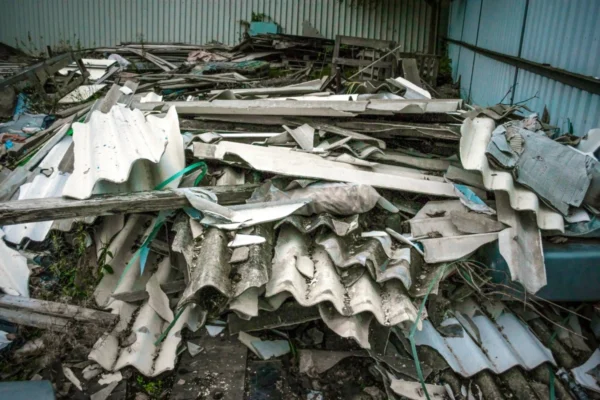
The correct disposal of asbestos is a vital environmental safeguard. Improper disposal, whether through unlicensed burial or fly-tipping has long-term environmental consequences.
The purpose of licensed landfills
Asbestos waste cannot be disposed of in a standard general waste landfill. It must be taken to a licensed, non-hazardous landfill site with a dedicated cell for stable hazardous waste. These sites are engineered to environmental specifications that guarantee the containment of the fibres:
- The waste is placed in a separate, dedicated section (the cell), preventing contact with other waste streams.
- Once deposited, the asbestos waste is immediately and deeply covered with a minimum amount of inert material (e.g., soil or clay) to encapsulate it. This prevents the bags from being damaged by subsequent landfill machinery and ensures the fibres cannot become airborne.
The damage caused by fly tipping
Fly tipping (the illegal dumping of waste) is a common problem, and unfortunately, asbestos often features heavily due to the cost and complexity of legal disposal.
- Illegal dumping grounds become public health time bombs. As the packaging degrades under the weather, the ACMs break down, releasing fibres into the air.
- Wind and rain action can wash asbestos fibres into local watercourses, making them impossible to contain or retrieve, and contaminating large areas of land.
- The cost of clearing and decontaminating fly tipped asbestos falls to local authorities or private landowners, often costing tens of thousands of pounds per incident.
For both environmental and financial reasons, there is no ethical or justifiable shortcut when it comes to asbestos disposal.
How Henderson Environmental can help
We take responsibility for the entire life cycle of the asbestos hazard, right up to its guaranteed, safe final resting place. Our comprehensive waste collection and disposal service is the reliable conclusion to any removal project, eliminating further risk and providing peace of mind.
Once the removal of asbestos is complete it is important that waste is correctly disposed of to eliminate further risk. We simplify this process for our clients by utilising our own specialist facilities.
Unlike many removal contractors who must rely solely on external haulage and disposal companies, our premises are a licensed waste transfer station. This licensing from the Environment Agency allows us to appropriately collect, store, and prepare any asbestos materials in a safe manner for final disposal.
As asbestos removal specialists, this capability is important because all asbestos waste is hazardous, including:
- Contaminated building materials
- Tools and equipment that cannot be decontaminated
- PPE used by our removal operatives
We handle the stringent packaging, the hazardous waste consignment notes, the pre-notification, and the transport via our specialist ADR-compliant vehicles and drivers. This single-source accountability ensures that the legal chain of custody is perfectly documented.
By partnering with Henderson Environmental, you can rest easy knowing that every fibre of hazardous material is removed from your building and disposed of with the utmost professional and legal care.
Contact our team today to discuss our licensed, end-to-end asbestos waste collection and disposal services and secure your property’s future.


Testimonials