

The importance of professional asbestos ceiling removal over DIY
For many property owners, updating or renovating an older home or commercial building feels like a straightforward task until they uncover materials that may contain asbestos.
While asbestos in ceilings was once considered a practical and durable building solution, we now know the serious health risks associated with disturbing asbestos-containing materials (ACMs). This is why asbestos ceiling removal should never be treated as a DIY project.
Whether the ceiling contains textured coatings like Artex, cement board, or the more hazardous asbestos insulating board (AIB), attempting to remove it without the right training, equipment, and legal qualifications can put you, your family, or your workforce in significant danger.
In this helpful guide, we explain why asbestos ceilings are dangerous, break down the legal requirements surrounding their removal, and demonstrate why trained professionals, like the specialists at Henderson Environmental, are the only people who should be handling this kind of work.
We’ll also explore the difference between licensed, non-licensed, and notifiable non-licensed work (NNLW) to help you better understand the type of ceiling you may be dealing with.
Where is asbestos commonly found in ceilings?
Asbestos was widely used throughout the UK until the late 1990s. Its heat resistance, strength, and affordability made it a common addition to many ceiling products, especially in homes and workplaces built or renovated between the 1950s and 1980s.
Textured coatings (Artex ceilings)
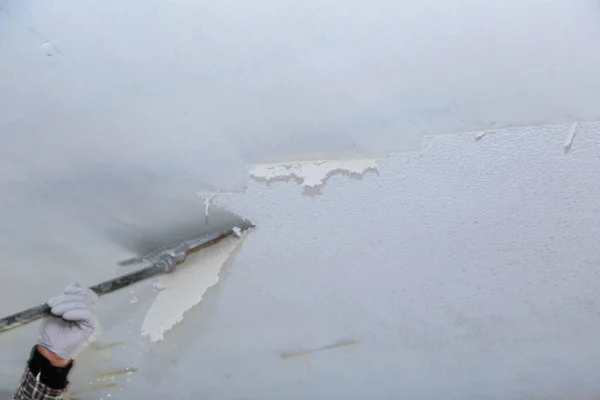
Artex ceilings were a popular decorative finish for much of the 20th century, prized for their ability to hide surface imperfections. However, many of these textured coatings contained asbestos. Even though the asbestos content is typically lower than in high-risk materials, disturbing popcorn ceilings, whether by scraping, drilling, or sanding, can still release harmful fibres into the air, making safe removal essential.
Asbestos insulating board (AIB)
Asbestos insulating board is high-risk. It is a licensed material due to its friability and the high likelihood of fibres being released when damaged. Therefore, it can only be dealt with by a licensed asbestos removal contractor. Many commercial and industrial buildings, and some residential properties, used AIB for fire protection, thermal insulation, or soundproofing.
Asbestos cement boards
Less hazardous than AIB but still dangerous if disturbed, cement-based ceiling panels often contain asbestos fibres bound into the material. Drilling, cutting, or breaking these panels significantly increases the risk of fibre release.
Ceiling tiles and void materials
Older building ceiling tiles, particularly those used in suspended ceiling systems, might also include asbestos, as might be the materials hidden behind then (pipe, lagging, insulation, packing materials, etc.) Understanding what type of material you’re facing is essential, because it determines whether the work falls under:
- Licensed removal, which is typically required for AIB
- Non-licensed removal, which is often applicable to cement panels or low risk textured coatings
- Notifiable non-licensed work (NNLW), which is required when the removal method (such as scraping textured coatings) disturbs the underlying plaster to a significant degree
But regardless of classification, all forms of asbestos ceiling removal present risks that should never be taken lightly.
Why are asbestos ceilings so dangerous?
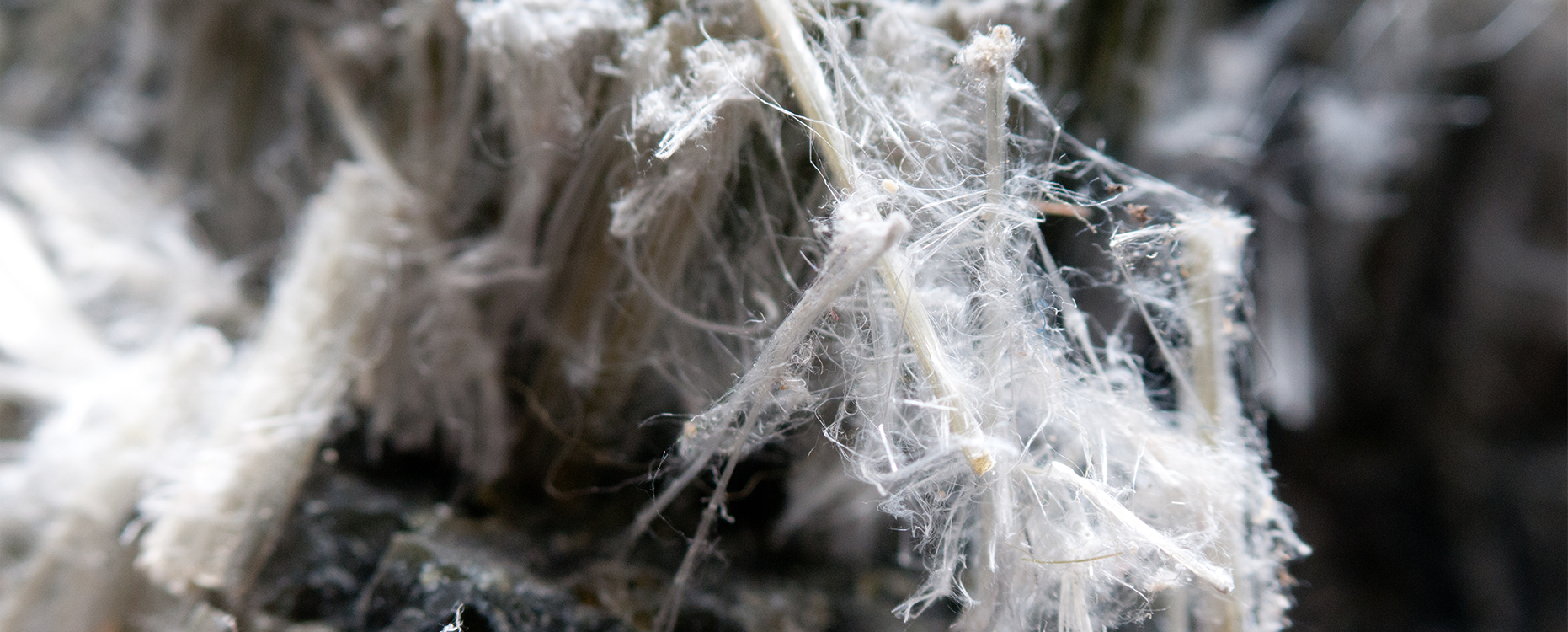
The biggest danger associated with asbestos is fibre release. Once asbestos fibres are airborne, they can remain suspended for long periods and are easily inhaled. Because asbestos is often hidden within ceiling materials, people may not realise they are disturbing it until it’s too late.
Health risks of asbestos exposure
Exposure to asbestos fibres can lead to life-threatening conditions. These include asbestosis, a scarring of lung tissue, lung cancer, pleural thickening, and mesothelioma, an aggressive form of cancer that affects the lining of the lungs or abdomen. These diseases typically develop decades after exposure, meaning the consequences of incorrect or unsafe removal may not appear for many years.
The particular risks of ceilings
It might sound obvious, but since ceiling materials are positioned overhead, removal activities can cause debris to fall directly into the breathing zone. Disturbing asbestos overhead by scraping, drilling, sanding, or pulling down materials, dramatically increases the quantity of airborne fibres.
Even textured coatings that are considered lower risk can become extremely hazardous when removal methods break the underlying plaster, making the work NNLW and requiring stricter controls.
Why is DIY asbestos ceiling removal unsafe?
Some property owners believe that small asbestos ceiling jobs can be tackled with a dust mask and a plastic sheet, but this is a dangerous misconception. DIY asbestos ceiling removal exposes people to unnecessary risk, and even small mistakes can lead to contamination or long-term health problems.
Here’s why handling it yourself is never worth it:
Incorrect tools and equipment
DIY attempts almost always begin with the wrong equipment. Basic PPE like paper masks or decorators’ overalls offer almost no protection against microscopic asbestos fibres. Professional removal teams wear specialist protective suits, use correctly fitted respirators, and rely on industrial vacuums designed to safely capture hazardous dust.
They also employ negative pressure units and sealed waste containers to manage fibre release. Without these, even a small job can quickly become dangerous.
No proper containment
A major risk of DIY asbestos ceiling removal is inadequate containment. The level of control required depends on the type of work being carried out. Licensed asbestos work, such as removing asbestos insulating board (AIB), must be undertaken under fully controlled conditions, using sealed enclosures and negative pressure units to prevent fibre escape.
Non-licensed work is carried out under semi-controlled conditions, with measures such as sealed work areas, wet removal techniques, and shadow vacuuming to limit fibre release. DIY approaches rarely meet either standard. Loose sheeting and improvised barriers offer little protection, allowing fibres to spread quickly and contaminate surrounding areas.
Cross-contamination risks
Once fibres escape, they settle into carpets, sofas, curtains, vents, and hard-to-reach areas. This type of contamination is extremely difficult to remove and can turn an entire property into a long-term health hazard.
Professional decontamination often requires deep cleaning, specialist equipment and even full replacement of soft furnishings. What begins as a small DIY project can escalate into a costly contamination problem affecting every room of the building.
No air monitoring or clearance testing
Professional asbestos removal includes essential air monitoring before, during, and after the job. Background testing establishes fibre levels, personal monitoring protects workers, and leak testing confirms the enclosure is performing properly.
It is also worth noting that clearance air monitoring is required for licensed asbestos removal. And while it is not required for non-licensed asbestos removal, it is still considered best practice in certain circumstances.
After removal, a formal four-stage clearance process ensures the area is genuinely safe to re-enter. DIY removal offers none of these safeguards. Without air testing, there is no reliable way to confirm whether fibres remain in the air or on surfaces, meaning the space may continue to pose a health risk long after the work appears complete.
Improper waste handling
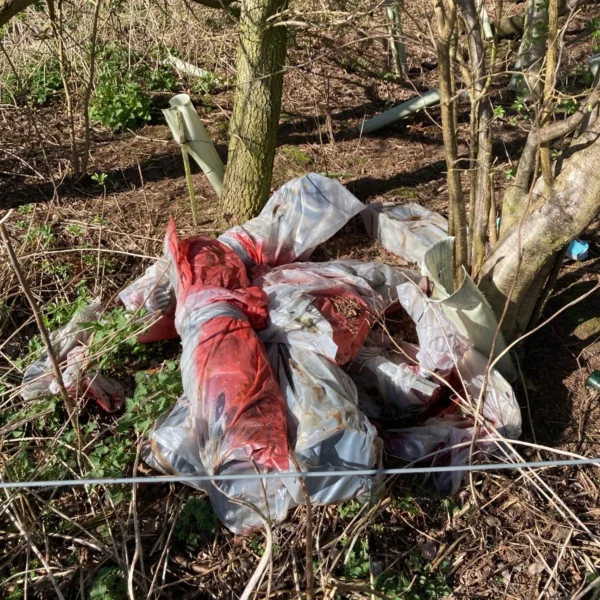
Asbestos waste must be double-bagged, labelled, stored safely and taken to a licensed disposal facility. Professional contractors follow strict hazardous waste regulations to ensure legal compliance and safe handling.
DIY efforts often lead to incorrect disposal, storing unsafe materials at home, or even fly-tipping – actions that carry serious legal consequences. Mishandling asbestos waste can result in fines and additional remediation costs, far outweighing any perceived savings from doing the work yourself.
Understanding the legal requirements
Under the Control of Asbestos Regulations 2012, anyone working on asbestos-containing materials must be competent and properly trained. The regulations also define when work must be carried out by a licensed contractor. Key obligations include:
1. Identifying ACMs before work begins
A survey must be undertaken by a qualified asbestos surveyor.
2. Risk assessments and plans of work
A detailed assessment must outline how asbestos risks will be controlled, who is undertaking the work, and what equipment will be used.
3. Licensing requirements
Licensed contractors are legally required for higher-risk materials like AIB. Non-licensed and NNLW tasks still require training and specific control measures.
4. Notification requirements
NNLW must be notified to the HSE, and specific health records, and medicals must be maintained for workers.
5. Safe disposal
Disposal routes and documentation must meet strict standards.
Duty to manage asbestos in the workplace
Also under the Control of Asbestos Regulations 2012, the ‘duty holder’, typically a building owner, landlord, or maintenance-responsible organisation, must manage asbestos risks in non-domestic properties. This duty protects anyone who works on or visits the building.
Duty holders must first identify any asbestos-containing materials (ACMs) through a management survey for normal use and maintenance, or a refurbishment/demolition survey for intrusive work. All findings must be recorded in an Asbestos Register, detailing the location, type, condition, and risk of each material.
The register informs a formal Asbestos Management Plan, which sets out control measures, monitoring, and communication to employees, contractors, and visitors. By following these steps, duty holders ensure compliance with the law and help keep everyone on site safe.
The benefits of professional asbestos ceiling removal
Hiring a competent, accredited asbestos removal contractor ensures the highest level of safety and compliance when dealing with asbestos-containing ceilings.
Professionals bring a combination of training and specialist equipment that simply cannot be replicated through DIY methods. Their approach not only protects those living or working in the property but also ensures that the removal process is carried out in line with all legal requirements.
Full contaminant and controlled removal
One of the biggest advantages of using professionals is their ability to set up full containment around the work area when required. They install industry-standard enclosures with sealed polythene sheeting, purpose-built airlocks, and controlled negative pressure units to prevent fibres from escaping.
This means that even if asbestos is disturbed during removal, airborne fibres remain securely contained within the enclosure rather than drifting into nearby rooms or ventilation systems. Controlled removal methods, such as wet stripping and shadow vacuuming, further reduce the likelihood of fibre release.
Specialist equipment
Professional asbestos teams work with equipment specifically designed for hazardous materials. This includes vacuums capable of safely capturing microscopic fibres, advanced air management systems that control airflow and prevent contamination, and certified PPE that provides reliable protection throughout the job.
These tools are essential in ensuring that fibres are properly contained, collected and disposed of – tools that simply aren’t available through standard DIY retailers.
Safe waste handling
Removing the asbestos itself is only part of the process. Proper waste handling is equally important. Professionals make sure that all asbestos waste is double-bagged, sealed, clearly labelled, and transported under hazardous waste regulations.
They use approved disposal routes and keep detailed waste transfer notes, guaranteeing compliance with the law. This controlled process eliminates the risk of accidental exposure from improperly stored or transported waste.
Efficient, low-disruption work
Finally, professional removal teams work efficiently and with minimal disruption. Their planning, containment, and removal methods are designed to keep the property clean and safe throughout the project.
Whether working in a home or a commercial environment, they understand the importance of completing the job quickly while maintaining the highest standards of safety and precision.
Why choose Henderson Environmental?
When it comes to managing the risks associated with asbestos, choosing an experienced and fully accredited contractor is essential. Henderson Environmental is one of the North East’s leading specialists in asbestos ceiling removal, recognised for our commitment to safety, compliance, and excellent customer care.
Our team is highly trained across all types of asbestos work, including licensed, non-licensed and notifiable non-licensed removal, ensuring we can confidently and safely manage everything from low-risk textured coatings to high-risk AIB ceilings.
We operate strictly in accordance with UK regulations and maintain all necessary HSE licences and industry accreditations. Our processes are designed to be efficient and minimally disruptive, with careful planning, robust containment, and precise removal methods that help properties return to normal as quickly as possible.
If you’d like expert support with asbestos ceiling removal or want to discuss your project with our team, get in touch today.
Testimonials